In an era defined by digital noise and visual clutter, there is a growing desire for silence—not just auditory, but spatial. Brutalist architecture, once criticized for its coldness, is experiencing a renaissance. But this revival is not about imposing concrete blocks on the landscape; it is about rediscovering the raw, tactile honesty of materials. At VRENEX, we believe that stone, in its most unpolished form, holds a quiet power.
The Emotional Resonance of Raw Materials
When we touch a rough-hewn stone wall, we are connected to the earth. There is a weight, a permanence, and a history embedded in the grain. We recently experimented with Travertine in our Milan project, leaving the pores open and unfilled. The result was a surface that caught the morning light in ways a smooth finish never could—creating shadows, depth, and a sense of time passing.
“Architecture should not just be seen; it must be felt. The coldness of stone makes the warmth of the sun feel more profound.”
This contrast is essential. Without the roughness of stone, the softness of a wool rug or the warmth of timber flooring loses its impact. Design is about orchestration—knowing when to scream and when to whisper. Stone whispers. It stands in the background, solid and unyielding, providing a grounding force for the life that happens within the space.
Orchestrating Light
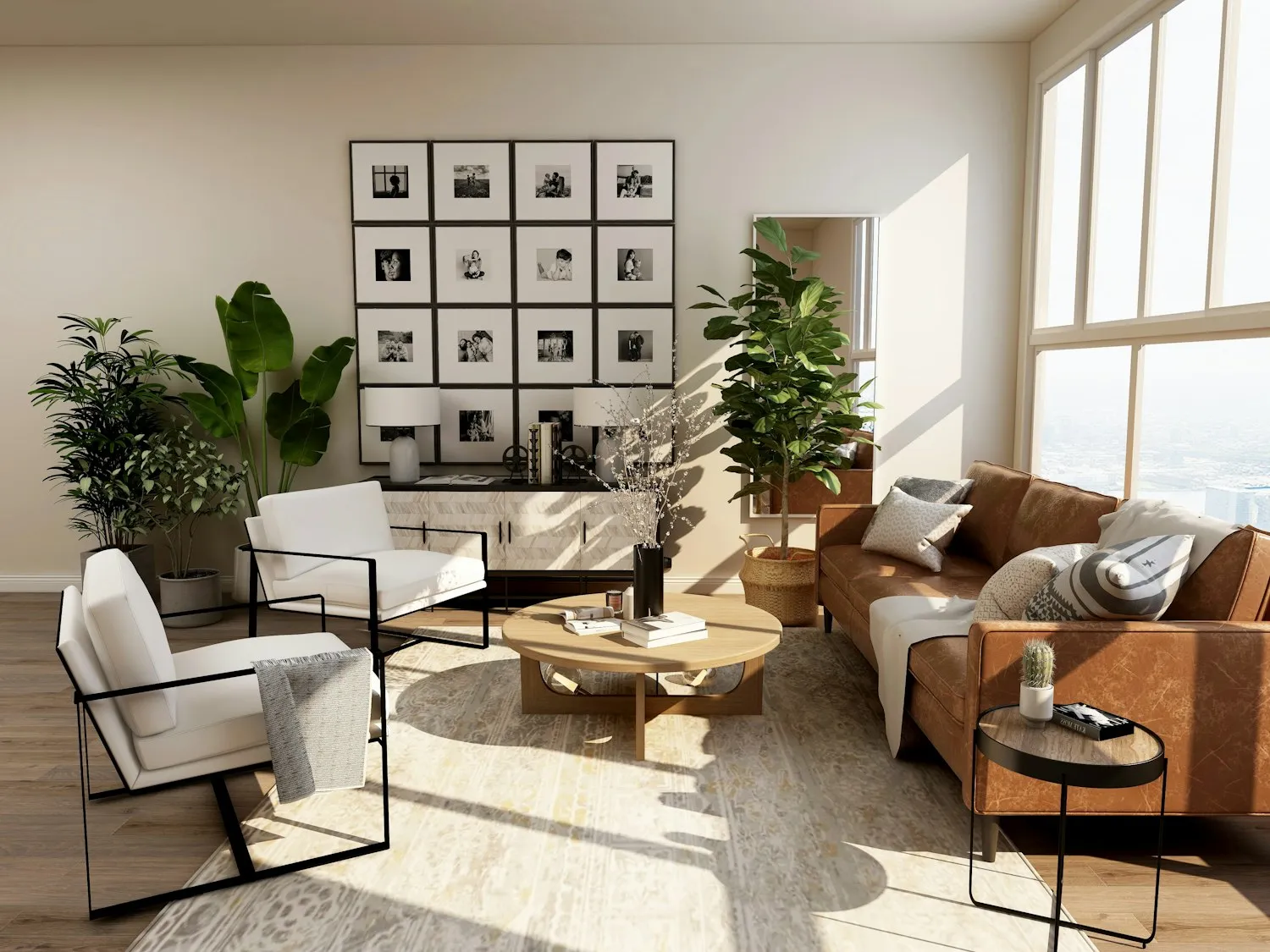
Brutalism is nothing without light. A concrete or stone wall in the dark feels oppressive. But wash it with a skylight, and it becomes a canvas. The texture grabs the light, creating a micro-landscape of shadows. In our design process, we model light paths before we even select materials.